
How Allama Shibli Nomani Built Shibli College: A 140-Year Educational Vision
Introduction
In the history of Azamgarh, few names are as closely connected with education, scholarship and intellectual life as Allama Shibli Nomani.
Today, Shibli National College is a familiar name to generations of students in Azamgarh. It has classrooms, laboratories, departments, libraries and thousands of alumni. But the institution did not begin that way.
Its story goes back to 1883, when Shibli Nomani established an institution known as the National School in Azamgarh.
The journey from that school to the college we know today took many decades. Shibli himself did not live long enough to see the institution become a degree college. He died in 1914. The later transformation was carried forward by his disciples, successors, educators and supporters.
That is what makes the history particularly interesting.
Shibli Nomani did not build today's college in a single lifetime. He planted the educational idea, created its foundation and inspired generations of people to continue building it.
This is the story of that journey.
Who Was Allama Shibli Nomani?
Allama Shibli Nomani (1857–1914) was an Indian Muslim scholar, historian, writer, poet and educationist.
He lived during a period when India was experiencing enormous changes under British rule. Traditional systems of learning were being challenged by new forms of education, modern science and changing political and social institutions.
Shibli understood that education was central to responding to this changing world.
He was associated with the intellectual environment created by Sir Syed Ahmad Khan and the Aligarh movement. His association with Sir Syed exposed him to the importance of modern education and the need to engage with contemporary knowledge.
At the same time, Shibli did not believe that modern education should mean abandoning one's cultural and intellectual heritage.
His educational thinking therefore tried to bring together two worlds:
- traditional scholarship and cultural knowledge;
- modern education, science and contemporary intellectual methods.
This balance became an important part of his educational philosophy.
The Educational Problem Shibli Saw
To understand why Shibli established an educational institution in Azamgarh, it is important to understand the environment in which he was working.
The nineteenth century was a period of major educational change in India. English-language education, modern sciences and new administrative systems were becoming increasingly important.
For communities that remained outside the emerging educational system, the consequences could be significant.
Shibli believed that educational backwardness could not be addressed simply by preserving old systems. At the same time, he did not believe that progress required people to completely abandon their cultural and intellectual traditions.
His answer was education that could connect the two.
The idea was simple but ambitious:
Modern knowledge should be used to strengthen society without losing the intellectual and cultural foundations of that society.
This philosophy helps explain why education became such an important part of Shibli's work.
1883: The Beginning of the National School
The most important date in the history of Shibli National College is 1883.
That was the year Shibli Nomani established the National School in Azamgarh.
It is important to understand this correctly.
Shibli did not establish today's Shibli National College as a fully developed college in 1883.
He established the institution that would eventually grow into it.
The original school was the seed from which the later institution developed.
At a time when educational institutions were becoming important instruments of social change, establishing a school was itself a significant undertaking.
Shibli's decision demonstrated that he regarded education not merely as individual learning but as a means of transforming society.
The institution would gradually expand over the following decades.
Why Was It Called the "National School"?
The word "National" is significant.
The school was founded in 1883, before the establishment of the Indian National Congress in 1885. The use of the term reflected a broader educational and social consciousness developing in nineteenth-century India.
For Shibli, education was connected with the intellectual and social development of the country.
The institution was therefore not conceived merely as a place where students memorized textbooks. It represented a larger idea about education and the development of society.
This is one reason the history of Shibli College is more than the history of a building or an organization.
It is part of the educational history of colonial India.
From School to College: A Journey of Several Generations
One of the most interesting facts about Shibli National College is that its development happened gradually.
It went through several stages:
| Year | Development |
|---|---|
| 1883 | National School was established |
| 1887 | The institution developed into a middle school |
| 1895 | It became a high school |
| 1942 | It became an intermediate college |
| 1946 | It achieved degree-college status |
| 1970 | Postgraduate education was expanded |
This timeline tells us something important.
Shibli's institution was not created in one step.
It evolved as the educational needs of the region changed.
A school became a middle school.
The middle school became a high school.
The high school became an intermediate college.
The intermediate institution eventually became a degree college.
Later, postgraduate education expanded its academic scope.
What we see today is therefore the result of decades of institutional development.
Shibli's Vision Was Bigger Than a School
If we look only at the physical institution, we may miss the larger contribution of Shibli Nomani.
Shibli was interested in creating an intellectual environment in which people could study, write, research and engage with contemporary knowledge.
His educational work in Azamgarh was therefore connected with his wider scholarly activities.
His legacy is also associated with institutions such as Darul Musannefin, later known as Shibli Academy, which became an important centre for scholarship, research and publication.
This gives us a broader way of understanding Shibli's contribution:
He was not simply trying to create one school. He was trying to create an ecosystem of learning and scholarship in Azamgarh.
Education and scholarship were connected in his vision.
Students needed schools and colleges.
Scholars needed libraries and research institutions.
Writers needed platforms for publishing.
A society needed people who could produce knowledge as well as consume it.
This broader intellectual ambition became one of the defining features of Shibli's legacy.
The Role of Aligarh and Sir Syed Ahmad Khan
Shibli's educational thinking cannot be separated completely from his association with Sir Syed Ahmad Khan.
Sir Syed was one of the most influential advocates of modern education among Indian Muslims in the nineteenth century. His work at Aligarh demonstrated the importance of institutions in creating long-term educational change.
Shibli worked in the intellectual environment associated with Aligarh and learned from that experience.
However, Shibli developed his own intellectual personality and educational outlook.
He was deeply interested in Islamic history, literature and scholarship, but he was also interested in modern historical methods and contemporary intellectual developments.
His educational vision can therefore be understood as an attempt to bridge:
Tradition + Modern Knowledge
rather than simply choosing one over the other.
That idea became particularly meaningful in Azamgarh.
Why Azamgarh?
Shibli's connection with Azamgarh was important because he was not working in one of the major colonial educational centres such as Calcutta, Bombay, Delhi or Aligarh.
Azamgarh was a regional town.
Building a serious educational institution there required local commitment and long-term effort.
The establishment of the National School meant that students from the surrounding region could have access to organized education without necessarily travelling to major cities.
Over time, the institution became part of the educational identity of Azamgarh.
This is one of the most important aspects of Shibli's contribution:
He helped demonstrate that intellectual and educational institutions could be developed outside the major metropolitan centres.
Shibli Did Not Finish the College Himself
This point deserves special attention.
Allama Shibli Nomani died in 1914.
At that time, the institution he had established had not yet become the degree college that exists today.
The institution continued developing after his death.
His disciples, successors, educators and supporters carried the work forward.
Eventually, the institution became an intermediate college in 1942 and achieved degree-college status in 1946.
This means that the college as we know it today is the product of a process that continued for decades after Shibli's death.
That distinction makes his achievement more — not less — interesting.
His greatest contribution was not the construction of a finished institution.
It was the creation of a vision that could survive beyond him.
The People Who Continued Shibli's Work
Institutions survive only when people continue to invest time, energy and resources in them.
After Shibli's death, his educational vision did not disappear.
His disciples and successors worked to strengthen the institutions associated with his name and ideas.
Teachers educated successive generations of students.
Administrators expanded the institution.
Supporters contributed resources.
Students carried the institution's reputation into different professions and parts of the country.
This is how educational institutions acquire a legacy.
One generation creates the foundation.
The next generation expands it.
Another generation modernizes it.
And thousands of students eventually carry its influence beyond the campus.
The history of Shibli College should therefore not be presented as the story of one man alone.
It is the story of one man's vision followed by generations of collective effort.
From an Educational Experiment to an Institution
There is a useful lesson in the timeline of Shibli College.
In 1883, Shibli had an idea.
But ideas alone do not create institutions.
The idea required:
- teachers;
- students;
- buildings;
- books;
- funding;
- administration;
- public support;
- academic development;
- and, most importantly, continuity.
The National School survived and evolved because people continued to believe in its purpose.
Over time, it became a larger educational institution.
This is why the history of Shibli National College is also a story about institution building.
What Made Shibli's Educational Vision Different?
Shibli's educational philosophy can be understood through several connected principles.
1. Education as Social Progress
For Shibli, education was not simply about obtaining employment.
Education could change the intellectual and social condition of a community.
An educated population could understand new ideas, participate in changing institutions and respond more effectively to new challenges.
2. Modern Knowledge
Shibli recognized the importance of contemporary education and modern intellectual methods.
Science, history and new forms of knowledge could not simply be ignored.
3. Cultural and Intellectual Continuity
At the same time, Shibli remained deeply connected to traditional scholarship, Islamic history, literature and culture.
He believed modern education and cultural identity could coexist.
4. Scholarship
Shibli was himself a prolific scholar and writer.
His life demonstrated that education should produce not only graduates but also thinkers, researchers and writers.
5. Institution Building
Perhaps the most practical part of his vision was the recognition that long-term progress requires institutions.
A single teacher can influence hundreds of students.
A good institution can influence generations.
The Growth of Shibli National College
The transformation of the National School into Shibli National College took place over many decades.
Its progression — from school to middle school, high school, intermediate institution and finally degree college — shows how the original educational idea adapted to changing circumstances.
The achievement of degree-college status in 1946 was particularly important.
It meant that the institution had moved beyond school-level education and had become part of the expanding landscape of higher education in India.
Later, postgraduate education further expanded its academic role.
The institution that began as a school in 1883 had therefore become a much larger centre of higher learning.
The Meaning of Shibli's Legacy Today
More than a century after the National School was founded, the most interesting question is not simply:
"What did Shibli build?"
A better question is:
"What did Shibli's idea make possible?"
His work contributed to the development of an educational tradition in Azamgarh that continued across generations.
The students who passed through these institutions went on to become teachers, administrators, lawyers, doctors, writers, academics, entrepreneurs and professionals in many fields.
Every generation added something to the institution.
That is how an educational legacy becomes larger than its founder.
A Seed Planted in 1883
Imagine Azamgarh in 1883.
There was no modern Shibli National College campus as we know it today.
There was no large network of departments.
There were no generations of alumni.
There was simply a scholar with an educational vision and an institution called the National School.
From that beginning came a journey lasting more than a century.
The school became a middle school.
The middle school became a high school.
The high school became an intermediate college.
The intermediate institution became a degree college.
And eventually, postgraduate education expanded its academic reach.
The physical institution changed.
Its academic structure changed.
Generations of teachers and students changed.
But the basic idea survived:
Education can transform individuals, and educated individuals can transform society.
Shibli Nomani's Greatest Contribution
It is tempting to measure a person's contribution by buildings, titles or institutions.
But Shibli's educational legacy suggests another way to measure it.
A school building can eventually become old.
A classroom can be demolished.
A curriculum can change.
But an idea can survive for generations.
Shibli's most important contribution was perhaps the belief that Azamgarh could become a centre of learning and scholarship.
The National School was the beginning of that belief becoming an institution.
Later generations expanded it.
Other institutions associated with his legacy strengthened the intellectual environment.
Students carried the influence further.
And today, the name Shibli continues to be associated with education and scholarship in Azamgarh.
Timeline: From 1883 to Shibli National College
1883  —  National School established by Allama Shibli Nomani
1887  —  Develops into a middle school
1895  —  Becomes a high school
1914  —  Allama Shibli Nomani passes away; his disciples and
         successors continue the institutional work
1942  —  Becomes an intermediate college
1946  —  Achieves degree-college status
1970  —  Postgraduate education expands
Conclusion: He Planted the Seed
The story of Shibli National College is ultimately a story about the power of an educational vision.
In 1883, Allama Shibli Nomani established the National School in Azamgarh.
He could not have known exactly what the institution would become more than a century later.
He did not personally witness its transformation into a degree college.
But he established something more important than a finished building.
He established a foundation.
His disciples and successors continued the work.
Teachers educated new generations.
Students carried the institution's name into the wider world.
And the school he started gradually developed into Shibli National College.
That is why the history of Shibli College should not be told simply as:
"Shibli Nomani built a college."
A more accurate and more powerful way to tell the story is:
"In 1883, Shibli Nomani planted the seed of an educational institution. Generations of people spent the next century growing it into the institution we know today."
The buildings may belong to the present.
But the idea began in 1883.
And that idea is perhaps Shibli Nomani's most enduring legacy to Azamgarh.
Sources and Further Reading
- Shibli National College, Azamgarh — Official Website — shiblicollege.ac.in
- Shibli National College — Official Brochure — Brochure (PDF)
- Shibli Academy, Azamgarh — History and Founders — shibliacademy.org
- Government of India / Press Information Bureau — material on Allama Shibli Nomani — pib.gov.in
- Encyclopaedic and historical references on Shibli National College — for dates and institutional chronology, cross-check against the college's official historical material before publication.
A Note on Historical Accuracy
The phrase "built Shibli College" is used in the title because it reflects the popular understanding of Shibli's role. Historically, however, it is more precise to say that Allama Shibli Nomani founded the National School in 1883, which later developed through several stages into Shibli National College.
This distinction matters because Shibli died in 1914, while the institution became a degree college in 1946.
The college's present form is therefore the result of a long institutional journey involving many generations, beginning with Shibli Nomani's educational initiative in 1883.
Need your admit card?
Download your ASNBB Season 3 admit card if your registration is approved.
Related Reads
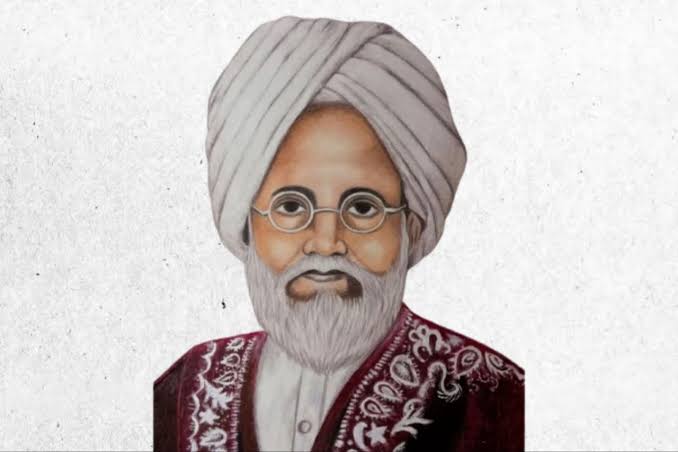 Allama Shibli Nomani
Who Was Allama Shibli Nomani?
A life sketch of Allama Shibli Nomani — the scholar, poet, and historian from Azamgarh whose vision for education still inspires generations.
 Personalities of Azamgarh
Kaifi Azmi: The Revolutionary Poet of Azamgarh
From the villages of Azamgarh to the heart of Indian cinema, Kaifi Azmi turned poetry into a force for social change. Here is his remarkable story.
 Uttar Pradesh History
A Short History of Uttar Pradesh
From ancient kingdoms and Mughal splendour to the freedom struggle, Uttar Pradesh sits at the crossroads of Indian history. Here is a quick tour.